

Find our
products online





Find our
products online
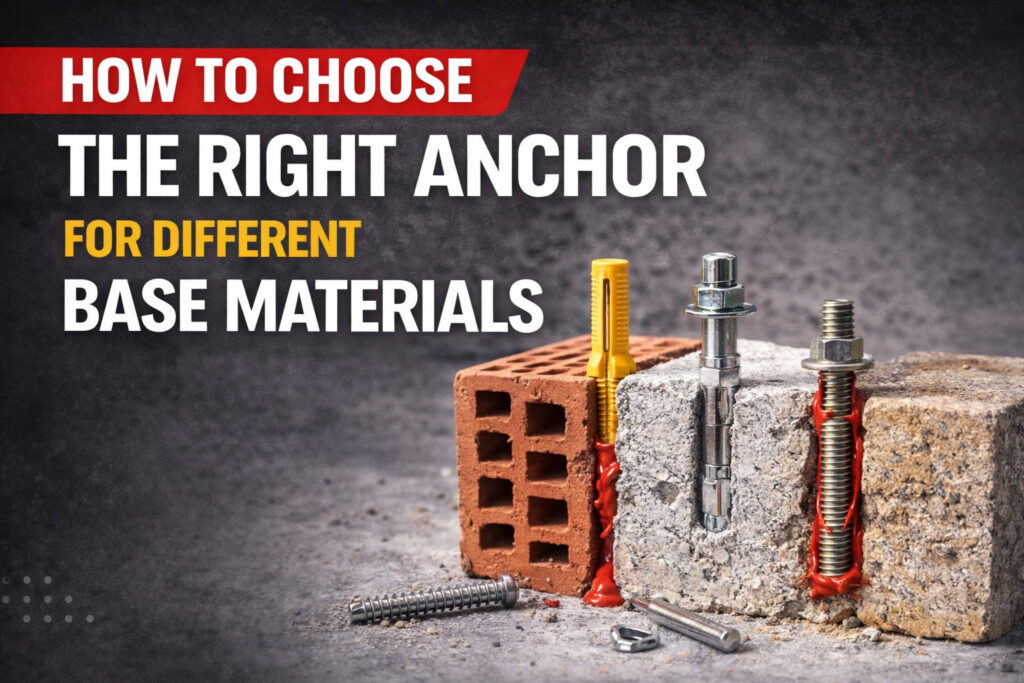
Choosing the correct anchor for a construction project is essential to ensure structural safety and durability. Different base materials require different anchoring systems because each material has unique properties such as strength, density, and porosity.
Understanding the compatibility between anchors and base materials helps achieve optimal fastening performance.
Understanding the most common installation mistakes can help contractors and installers achieve better performance and durability.
Concrete is one of the strongest and most common base materials used in construction.
Suitable anchors include:
• Chemical anchors
• Wedge anchors
• Sleeve anchors
See also KWIK Mechanical Anchoring System
Brick masonry requires anchors that distribute load evenly and prevent cracking.
Common options include:
• Nylon anchors
• Chemical anchors
• Frame anchors
See also KWIK Nylon Anchoring System
Hollow bricks require anchors designed to prevent pull-out failures.
Recommended anchors include:
• Chemical anchors with sleeves
• Nylon anchors
See also KWIK Nylon Anchoring System
Natural stone installations require anchors that minimize stress and provide secure grip.
Chemical anchors are often the preferred solution.
See also KWIK Chemical Anchoring System
Selecting the correct anchor for the base material ensures reliable load capacity, durability, and long-term structural performance.