

Find our
products online





Find our
products online
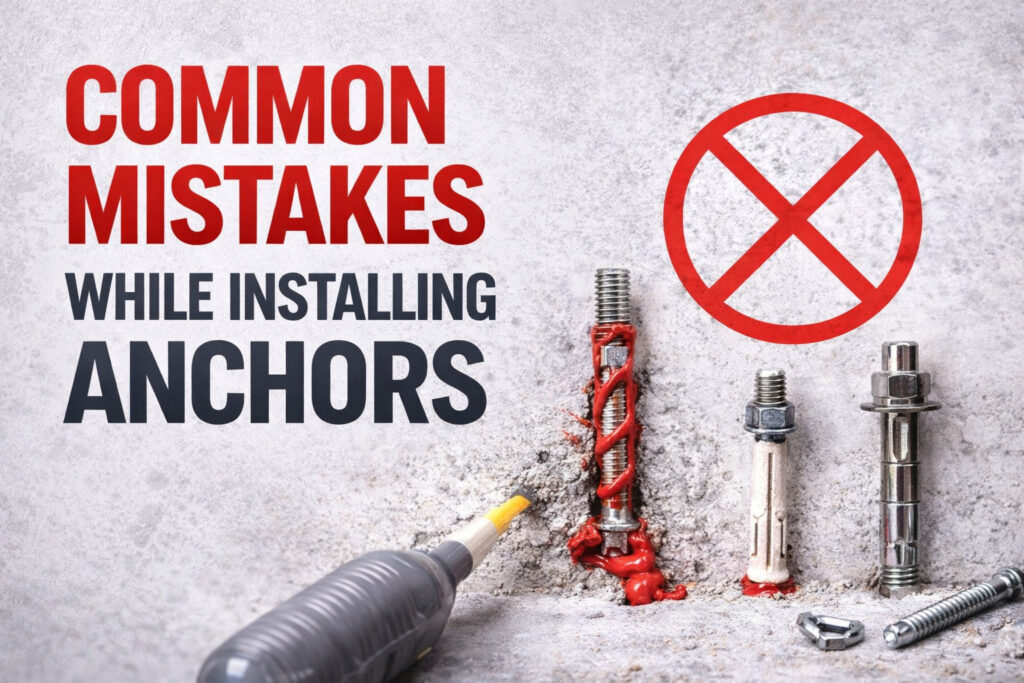
Anchoring systems are widely used in construction to secure structural and non-structural elements to concrete, masonry, or stone surfaces. However, improper installation can compromise the effectiveness of the anchor and lead to safety risks.
Understanding the most common installation mistakes can help contractors and installers achieve better performance and durability.
Drilling the wrong hole diameter can affect anchor performance.
If the hole is too large, the anchor may not grip properly. If it is too small, installation becomes difficult and may damage the anchor.
Dust and debris left inside the drilled hole can significantly reduce the bond strength of chemical anchors.
Proper hole cleaning is essential to ensure the adhesive bonds correctly with the base material.
Anchors must be installed at the recommended embedment depth to achieve the required load capacity.
Shallow installation can weaken the anchor’s holding strength.
Excessive torque can damage mechanical anchors and reduce their holding capacity.
Chemical anchors require curing time. Applying load before the adhesive has fully cured can weaken the bond.
Avoiding these common installation mistakes helps ensure that anchoring systems perform safely and efficiently in construction projects.